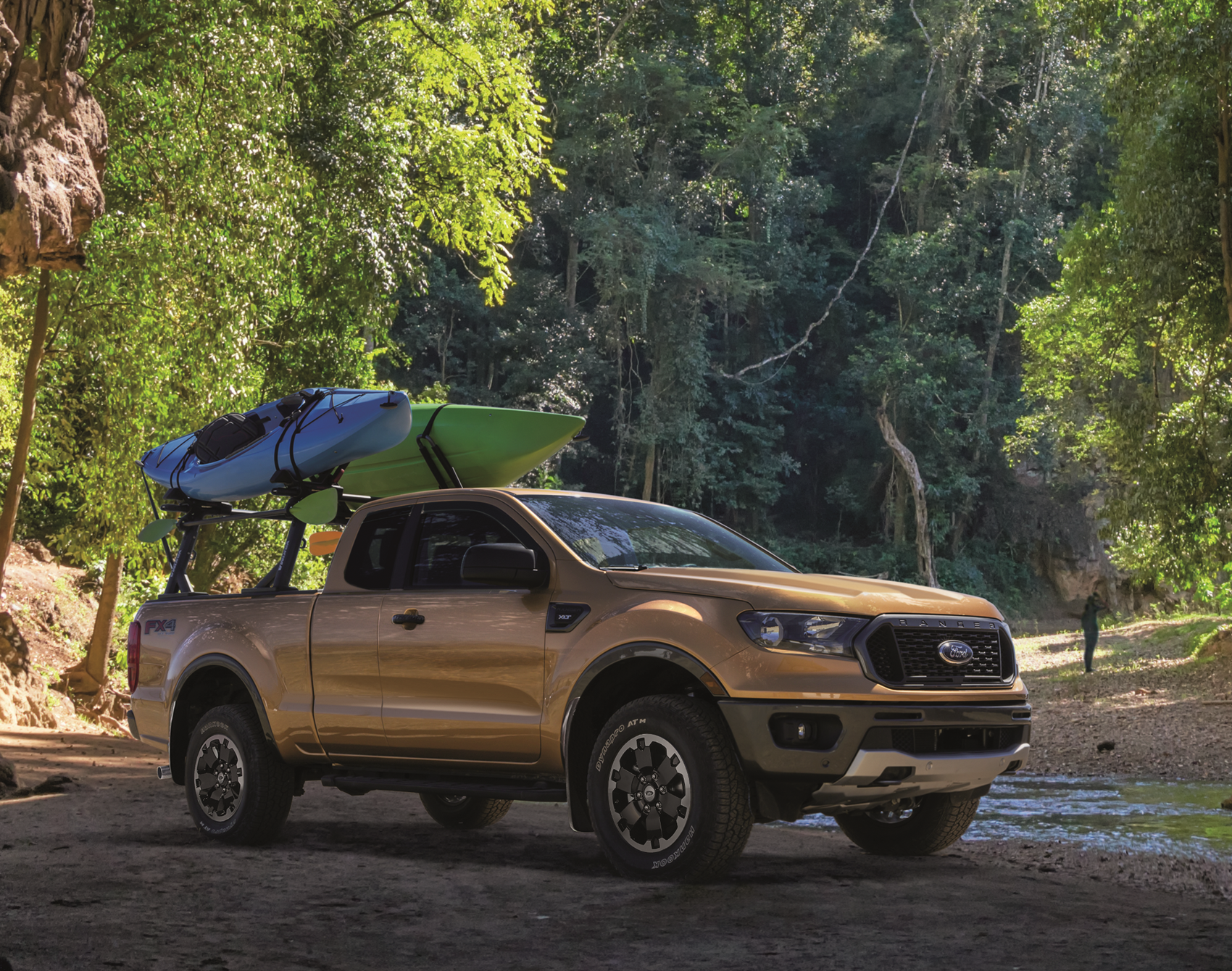






The Ford Maverick has always done pickup-truck things a little differently. It’s compact enough for everyday driving, useful enough for weekend projects, and available with two powertrains that take very different approaches to performance and efficiency.
That makes Ford Maverick MPG an important part of choosing the right one.
The Hybrid is the obvious fuel-saver, especially if your week involves plenty of stoplights and shorter trips. Strong Ford Maverick hybrid MPG gives it a clear edge for drivers focused on efficiency, while the EcoBoost trades some of that fuel economy for more horsepower and a different performance feel.
For drivers around Kingsland and Coastal Georgia, the better choice really comes down to where your miles happen.
The Quick Answer: Hybrid Wins the MPG Battle
If fuel economy is your biggest priority, the Hybrid has the advantage.
The 2026 front-wheel-drive Maverick Hybrid earns an EPA-estimated 42 MPG city, 35 MPG highway, and 38 MPG combined. Ford also offers the hybrid with available all-wheel drive.
Those Ford Maverick MPG numbers are especially impressive for a vehicle that still gives you a pickup bed and everyday truck utility.
The available 2.0-liter EcoBoost brings 250 horsepower and 280 lb-ft of torque. Its mileage varies by drivetrain and configuration, with EcoBoost FWD rated around 23 city, 32 highway, and 26 combined MPG, while AWD models are rated around 22 city, 30 highway, and 25 combined.
Why the Hybrid Loves City Driving
The biggest Ford Maverick hybrid MPG advantage shows up around town.
Hybrid systems can use electric assistance more effectively in slower, stop-and-go driving. That’s why the Maverick Hybrid’s 42 MPG city rating is actually higher than its 35 MPG highway figure.
For school runs, errands around Kingsland, short commutes, and trips where you’re constantly slowing down and accelerating again, that can make the Hybrid a very natural fit.
The Ford Maverick MPG difference also becomes more meaningful if most of your weekly driving happens before you ever reach I-95.
If your truck is primarily an everyday vehicle that occasionally gets called into action for mulch, bikes, hardware-store runs, or weekend gear, it’s hard to ignore the Hybrid’s efficiency.
EcoBoost Gives Up MPG for More Muscle
Efficiency isn’t the only number that matters.
The available 2.0-liter EcoBoost produces 250 horsepower and 280 lb-ft of torque, giving it considerably more output than the efficiency-focused Hybrid setup.
That tradeoff shows up in Ford Maverick EcoBoost MPG. A conventional AWD EcoBoost configuration is rated around 22 MPG city and 30 MPG highway, with 25 MPG combined. FWD improves those figures to roughly 23 city, 32 highway, and 26 combined.
So why choose it?
The EcoBoost makes sense when stronger acceleration, turbocharged performance, or specific Maverick configurations matter more to you than squeezing the most miles from every gallon.
That’s the bigger story behind Ford Maverick MPG. Better mileage doesn’t automatically mean the better powertrain for every driver.
Highway Miles Make the Decision More Interesting
The Hybrid’s advantage is largest in the city. Out on the highway, the gap narrows.
The FWD Hybrid is rated at 35 MPG highway, while the FWD EcoBoost reaches about 32 MPG highway.
That means Ford Maverick MPG can play a different role in your decision if most of your driving happens along I-95 between Kingsland, Jacksonville, and Brunswick rather than on local streets.
The Ford Maverick MPG hybrid numbers still favor the electrified powertrain, but the EcoBoost gets closer once cruising speeds become the norm.
If your daily drive is mostly interstate and you value the EcoBoost’s extra power, giving up a few highway MPG may be a trade you’re perfectly happy to make.
AWD No Longer Means Walking Away From the Hybrid
This is one of the biggest reasons the current Maverick lineup deserves a fresh look.
Hybrid buyers can now get available AWD, so wanting extra traction doesn’t automatically push you toward EcoBoost. Ford also offers the 4K Tow Package with properly equipped Hybrid AWD configurations, allowing up to 4,000 pounds of maximum available towing capacity.
That makes Ford Maverick hybrid MPG more relevant to drivers who previously might have ruled the Hybrid out for capability reasons.
It also means choosing based on Ford Maverick MPG isn’t as simple as “Hybrid for efficiency, EcoBoost for everything else.” There’s much more overlap between the two now.
Hybrid or EcoBoost: Which Fits Your Drive?
Choose the Hybrid if your priorities lean toward commuting, errands, city driving, and keeping fuel stops farther apart. Its strong city rating is the main reason the Ford Maverick hybrid MPG conversation gets so much attention.
Choose EcoBoost if you’d rather have 250 horsepower, stronger turbocharged performance, or one of the configurations built specifically around the 2.0-liter engine.
The Ford Maverick EcoBoost MPG numbers aren’t as high, but fuel economy is only one part of owning a truck. How it accelerates, where you drive, what you tow, and what you expect from it matter too.
For many Kingsland drivers, there isn’t a wrong answer. There’s just a better match for the miles you actually drive.
Put Ford Maverick MPG to the Real-World Test in Kingsland
Specs can tell you which Maverick uses less fuel. A drive can tell you which one you actually want to live with.
At Murray Ford Kingsland, we can help you explore current Ford Maverick inventory and compare Ford Maverick MPG hybrid figures with EcoBoost ratings based on your commute, weekend plans, and capability needs.
If Ford Maverick MPG is leading your decision, our team can walk you through available drivetrains and configurations before you choose. Take both powertrains for a drive, think about where most of your miles happen, and find the Maverick that makes the most sense once the numbers meet the road.