


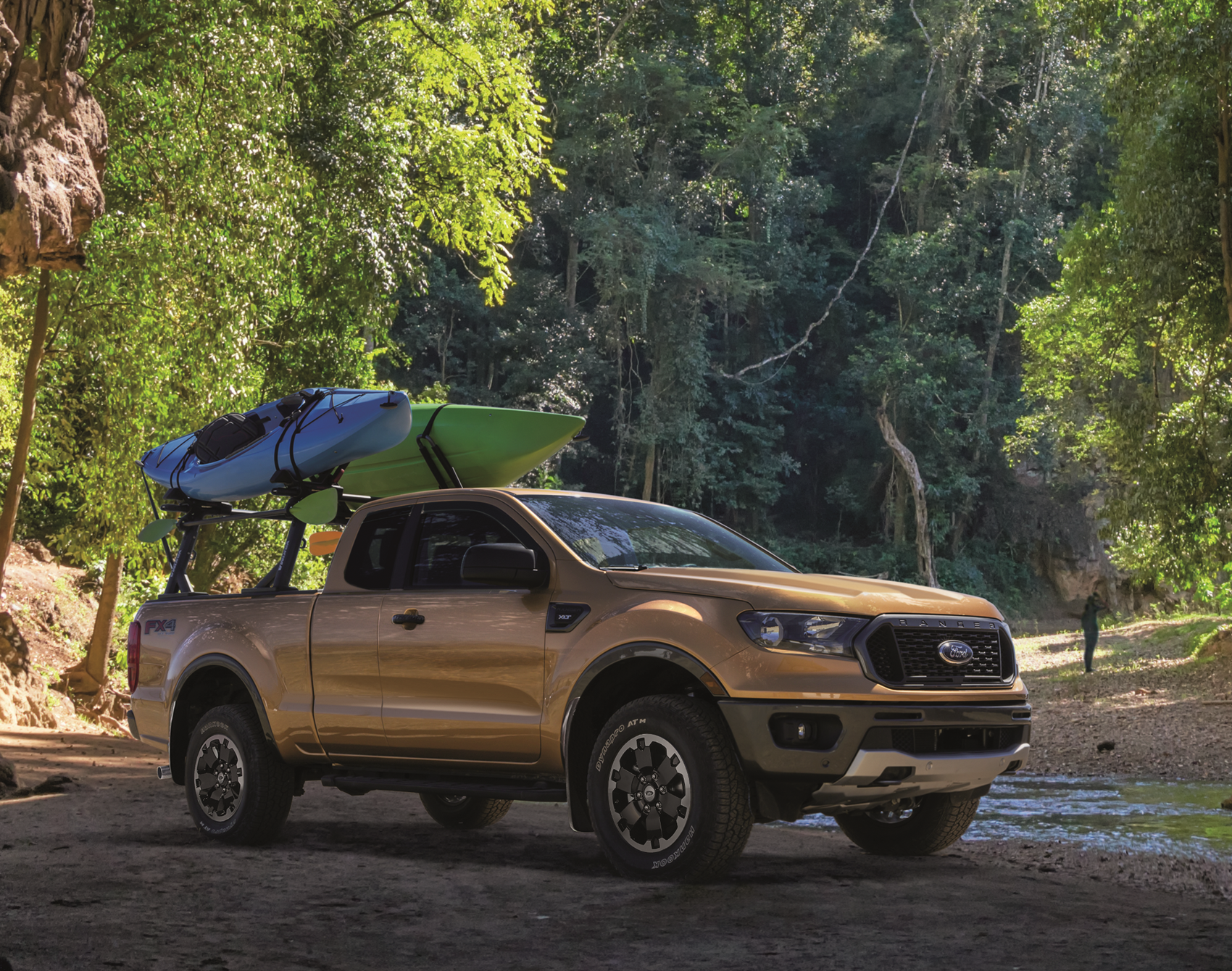
The Ranger may be midsize, but its engine menu gives you plenty to think about.
For 2026, the Ford Ranger engine lineup includes three EcoBoost® choices ranging from the everyday-ready 2.3L four-cylinder to the 405-horsepower V6 in Ranger Raptor. The trick isn’t simply picking the most powerful one. It’s finding the engine that fits your towing plans, driving habits, and weekends around Kingsland.
Here’s how the 2.3L, 2.7L, and 3.0L EcoBoost engines differ.
Three Ranger Engines, Three Levels of Muscle
Ford gives the 2026 Ranger three distinct power levels:
2.3L EcoBoost: 270 horsepower and 310 lb-ft of torque
2.7L EcoBoost V6: 315 horsepower and 400 lb-ft of torque
3.0L EcoBoost V6: 405 horsepower and 430 lb-ft of torque
The 2.3L comes standard on XL, XLT, and Lariat. The 2.7L is available on XLT and Lariat models with 4x4, while the Ford Ranger 3.0 engine is reserved for Ranger Raptor. All three use a 10-speed automatic transmission.
That makes the Ford Ranger engine decision less complicated than it first appears. Start with how much power you need, then decide whether towing, added torque, or high-performance off-roading matters most.
The 2.3L EcoBoost Handles More Than Daily Driving
The Ford Ranger 2.3 engine may be the entry point, but it’s hardly basic.
With 270 horsepower and 310 lb-ft of torque, it gives the Ranger enough muscle for commuting, hauling gear, home projects, and weekend adventures. Properly equipped, the 2.3L Ranger can also tow up to 7,500 pounds. The Ranger XL reaches a maximum available payload of 1,767 pounds with the 2.3L and 4x2 drivetrain.
For many Kingsland drivers, that’s already a useful combination. If you want a Ford Ranger engine that can handle normal truck duty without paying for power you may rarely use, the 2.3L makes a strong case.
It’s especially worth considering if your typical week involves commuting, carrying equipment, heading to the boat ramp, or towing a moderate trailer rather than chasing maximum performance.
The 2.7L V6 Brings a Big Torque Jump
Want more punch without stepping all the way into Ranger Raptor? The 2.7L may be the sweet spot.
This available Ford Ranger engine produces 315 horsepower and 400 lb-ft of torque. That’s 90 lb-ft more torque than the 2.3L, a difference that can be noticeable when accelerating, merging, climbing grades, or pulling weight.
The 2.7L can also tow up to 7,500 pounds when properly configured, matching the Ranger’s maximum available tow rating.
For shoppers choosing an XLT or Lariat 4x4, the 2.7L offers a useful middle ground. You get substantially more torque without moving into the specialized suspension, drivetrain, and performance setup of Raptor.
If your Ranger regularly carries gear, pulls a trailer, or simply needs stronger passing power, this is the engine worth a closer look.
The Ford Ranger 3.0 Engine Turns Up the Fun
The Ford Ranger 3.0 engine isn’t simply another upgrade on the options sheet. It belongs specifically to Ranger Raptor.
Its twin-turbocharged 3.0L EcoBoost V6 produces 405 horsepower and 430 lb-ft of torque. Ranger Raptor pairs that Ford Ranger engine with full-time 4x4, front and rear locking differentials, and hardware designed around serious off-road performance.
Here’s the interesting part: more horsepower doesn’t equal more towing.
Ranger Raptor is rated to tow up to 5,510 pounds, while properly equipped Rangers with the 2.3L or 2.7L can reach 7,500 pounds.
That tells you exactly what the 3.0L is about. It’s for drivers who put trail performance, acceleration, and off-road capability ahead of maximum trailer weight.
Which Ford Ranger Engine Fits Your Truck?
Think about the Ranger you actually need, not just the biggest number on the spec sheet.
The Ford Ranger 2.3 engine makes sense for everyday driving, lighter-duty truck work, and shoppers who still want access to serious towing capability. The 2.7L adds a substantial dose of torque and works well for drivers who regularly pull, haul, or simply prefer stronger V6 performance.
The Ford Ranger 3.0 engine is the enthusiast choice. If Ranger Raptor’s off-road hardware is what drew you to the truck in the first place, its 405-horsepower V6 completes the package.
For coastal Georgia drivers, your answer may come down to what’s usually behind the truck: nothing, a utility trailer, a boat, or a cloud of dust.
Find Your Ranger Power at Murray Ford of Kingsland
Specs can narrow the field, but the right Ford Ranger engine should also feel right from behind the wheel.
At Murray Ford of Kingsland, our team can help you look at Ranger trims, engines, 4x4 configurations, towing equipment, and current availability based on how you plan to use your truck. You’ll find us at 2030 Highway 40 East in Kingsland.
Explore our current Ranger inventory and see whether the Ford Ranger 3.0 engine, 2.7L V6, or 2.3L EcoBoost feels ready for your workdays, weekends, and next trip down the road.
Pick the Engine for the Life Your Ranger Will Live
The 2.3L delivers plenty of capability without overcomplicating things. The 2.7L adds the torque many truck shoppers want, while the 3.0L turns Ranger Raptor into an entirely different kind of machine.
There’s no universal best Ford Ranger engine. There’s just the one that best matches what you plan to do when the pavement ends, the trailer gets hitched, or Monday morning puts the truck back to work.
