


You’ve probably seen the EcoBoost® badge on a Ford truck, SUV, or Mustang. But what is an EcoBoost engine, and what does that badge really mean?
Ford EcoBoost engines combine turbocharging, direct fuel injection, and variable camshaft timing to deliver strong power and torque from a smaller gas engine. The goal isn’t just a smaller engine. It’s a smarter balance of performance and efficiency.
For Kingsland drivers asking what is EcoBoost, think of it as Ford’s way of delivering responsive power with fuel economy in mind. Actual results still depend on the vehicle, driving habits, and conditions.
What Is an EcoBoost Engine and How Does It Work?
Three core technologies help explain what an EcoBoost engine is:
Turbocharging uses exhaust gases to spin a turbine that pushes more air into the engine. That extra airflow helps the engine produce stronger power when you need it.
Direct fuel injection sends fuel precisely into the combustion chamber. This helps the engine respond efficiently across changing speeds and driving conditions.
Twin independent variable camshaft timing, often called Ti-VCT, adjusts valve timing based on engine speed and demand. That supports a better balance of torque, power, and efficiency.
Together, these technologies capture the meaning of EcoBoost: strong turbocharged performance from a smaller engine, with fuel economy kept in mind.
Why Ford Shoppers Choose EcoBoost
Understanding what EcoBoost is becomes easier when you look at what it can deliver behind the wheel.
Strong Power From Less Displacement
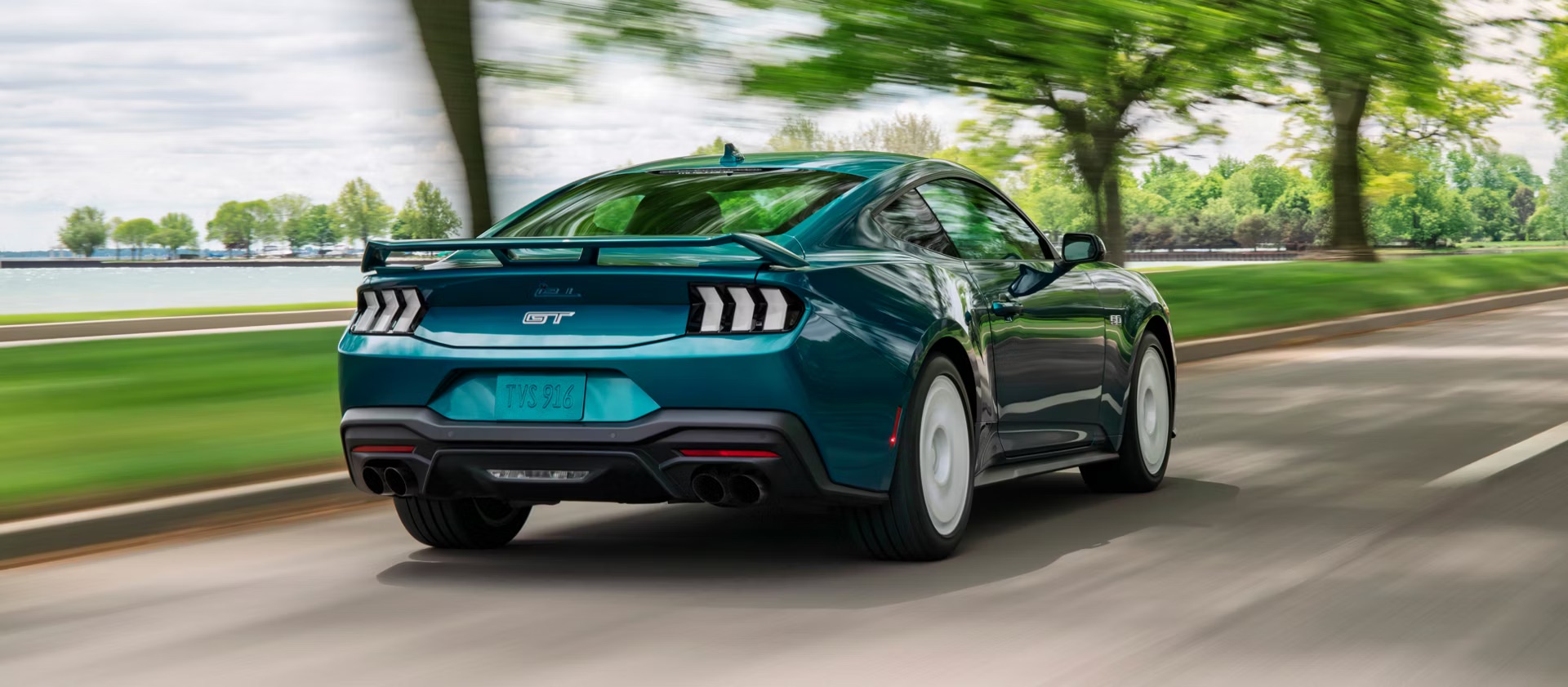
A turbocharged engine can produce output comparable to a larger naturally aspirated engine. The 2026 Mustang’s 2.3-liter EcoBoost four-cylinder, for example, produces 315 horsepower and 350 lb-ft of torque.
Useful Low-End Torque
Turbocharged torque can arrive lower in the rev range, helping with acceleration, passing, hills, and towing. That’s especially useful in pickups and larger SUVs.
Efficiency When You Aren’t Pushing Hard
A smaller engine can use less fuel under lighter loads than a larger engine might. Actual fuel economy still depends on vehicle weight, gearing, weather, cargo, towing, and driving habits.
A Powertrain for Different Personalities
EcoBoost engines appear in vehicles ranging from the compact Escape and Maverick to the Bronco, Mustang, F-150, and Expedition. The technology can be tuned for commuting, towing, off-roading, or performance.
Which 2026 Ford Vehicles Offer EcoBoost Engines?
Ford offers EcoBoost power across its 2026 SUVs, trucks, and performance models. For shoppers wondering what an EcoBoost engine is, it’s a flexible engine family built for very different jobs.
- The 1.5-liter EcoBoost is available in the Escape and Bronco Sport, while the 2.0-liter appears in the Escape, Bronco Sport, and Maverick.
- The 2.3-liter powers models including the Bronco, Explorer, Mustang, and Ranger.
- The 2.7 EcoBoost V6 is available in the Bronco, F-150, and Ranger, with strong low-end torque for towing, passing, and daily driving.
- Higher-output options include the 3.0-liter EcoBoost V6 in the Bronco Raptor, Explorer ST, and Ranger Raptor, plus the 3.5-liter EcoBoost V6 in the F-150 and Expedition.
An EcoBoost engine is one core technology tuned for commuting, towing, off-roading, and performance. That flexibility is central to the meaning of EcoBoost. Exact output and availability vary by model, trim, and configuration.
EcoBoost vs. a Naturally Aspirated Engine
A naturally aspirated engine draws air into its cylinders without a turbocharger, which can mean simpler power delivery and fewer turbo-related components.
So, what is EcoBoost by comparison? EcoBoost uses forced induction to help a smaller engine produce stronger power and torque. When shoppers ask what is an EcoBoost engine, that turbocharged difference is usually the key.
Neither design is automatically better. The right choice depends on how you drive, tow, and prioritize efficiency, simplicity, or maximum output.
EcoBoost vs. Hybrid and PowerBoost
EcoBoost is gas-only technology. Ford hybrids add an electric motor and battery to assist the engine and recover energy while slowing.
PowerBoost® is Ford’s full-hybrid truck powertrain. In the F-150, it pairs a 3.5-liter EcoBoost V6 with electric assistance and available Pro Power Onboard.
So, what is an EcoBoost engine compared with PowerBoost? EcoBoost uses turbocharged gas power, while PowerBoost adds hybrid hardware for more torque, improved efficiency potential, and available onboard power.
Smart Ownership Starts Under the Hood
Knowing what an EcoBoost engine is also means knowing how to care for one. Follow Ford’s oil-change schedule, use the specified oil, and check the owner’s manual for fuel recommendations. Some models can use regular gas but may need premium to reach maximum advertised output.
Towing, heavy payloads, short trips, and aggressive acceleration can affect fuel economy and service needs. For shoppers asking what is EcoBoost in real-world use, remember that frequent boost can increase fuel use.
Find the Ford Engine That Fits Your Drive
Still deciding what is an EcoBoost engine and whether it fits your routine? At Murray Ford of Kingsland, we’ll help you compare EcoBoost, hybrid, PowerBoost, and naturally aspirated options based on your commute, towing plans, and performance priorities.
Browse our Ford inventory online or visit us in Kingsland to test-drive different powertrains and get a clearer sense of the meaning of EcoBoost from the driver’s seat.
Ford EcoBoost FAQs
Here are quick answers covering what EcoBoost is, output, durability, and Ford’s turbocharged engine history.
What does EcoBoost mean?
EcoBoost is Ford’s name for gas engines that use turbocharging, direct fuel injection, and variable camshaft timing to balance performance and efficiency. For shoppers asking what is an EcoBoost engine, the “Eco” points to efficiency goals, while “Boost” refers to turbocharged power.
Is the 2.7 EcoBoost a good engine?
The 2.7 EcoBoost is a strong choice for shoppers who want substantial torque without stepping up to Ford’s largest gas engines. It shows what is EcoBoost in practical terms by using turbocharging to deliver strong output from a smaller V6. In 2026 applications, the F-150 version produces 325 horsepower and 400 lb-ft of torque, while the Bronco version can produce 330 horsepower and 415 lb-ft.
How much horsepower does a 3.5 EcoBoost have?
Output depends on the vehicle and calibration. The 2026 F-150’s available 3.5-liter EcoBoost produces 400 horsepower and 500 lb-ft, while the 2026 Expedition offers 400 horsepower or 440 horsepower with its high-output version.
Are EcoBoost Mustangs reliable?
Reliability depends heavily on maintenance, use, and vehicle history. A properly maintained Mustang EcoBoost can be a practical performance car, but shoppers should inspect service records and have any used model evaluated before purchase.
What year did Ford introduce the EcoBoost engine?
Ford introduced the EcoBoost name and its first production applications for the 2010 model year. Shopping used? Remember that engine designs, components, and outputs have changed across generations.

