



A new Ford already comes with factory-backed protection. At Murray Ford of Kingsland, qualifying vehicles can add another number worth noticing: 15 years or 150,000 miles of powertrain coverage.
Understanding your Ford warranty means knowing where factory coverage starts, what happens when it ends, and how Murray Ford’s additional protection fits into the picture. Ford’s standard New Vehicle Limited Warranty runs for 3 years/36,000 miles, while its gasoline Ford powertrain warranty lasts 5 years/60,000 miles, whichever comes first.
At Murray Ford of Kingsland, our eligible vehicles can carry powertrain protection much farther down the road.
First, What Comes With a New Ford?
The Ford factory warranty isn’t one single blanket of coverage. Different parts of the vehicle have different warranty periods.
Ford’s New Vehicle Limited Warranty provides 3-year/36,000-mile coverage and repairs or replaces covered parts that are defective in factory-supplied materials or workmanship. Separate powertrain coverage runs for 5 years/60,000 miles on gasoline models. That makes the standard Ford warranty your first layer of protection when you buy a new vehicle.
The important word is limited. Warranties have terms, exclusions, and mileage or time limits, so they’re different from prepaid maintenance or a promise that every future repair will be covered.
Powertrain Coverage Focuses on the Hardware That Moves You
The Ford powertrain warranty concentrates on major mechanical components such as the engine, transmission, and drivetrain.
Murray Ford of Kingsland’s 15-year/150,000-mile warranty follows that same powertrain-focused approach. Covered areas include the engine, transmission and transaxle, front-wheel-drive system, and rear-wheel-drive system.
So this isn’t an extra 15 years of bumper-to-bumper Ford warranty coverage. It’s extended protection for qualifying powertrain components, which is an important distinction when you’re comparing warranty benefits.
Where Murray Ford Takes Coverage Further
Here’s where the difference becomes clear.
The standard gasoline Ford powertrain warranty generally provides coverage for 5 years or 60,000 miles. On qualifying vehicles, Murray Ford of Kingsland adds a separate dealership-provided powertrain warranty lasting up to 15 years or 150,000 miles (whichever comes first) beginning on the vehicle’s sale date and subject to the program’s terms.
In other words, this isn’t simply a Ford warranty with a later expiration date. It’s an additional layer of powertrain coverage designed to give our qualifying Murray Ford customers greater long-term confidence.
The Best Part? You’re Not Tied to One Service Lane
Keeping the 15-year coverage doesn’t mean every maintenance visit has to happen at Murray Ford of Kingsland.
Our program allows factory-scheduled maintenance to be performed elsewhere in the United States or Canada. To maintain coverage, owners must follow the manufacturer’s required maintenance schedule and keep their records. You’ll need to retain receipts for required maintenance and have the work completed by an ASE Certified shop.
Our Kingsland service team is always here when you want Ford-trained care close to home. But keeping this added protection alongside your Ford warranty doesn’t require you to return to Murray Ford for every oil change. That flexibility can matter even more once the original Ford powertrain warranty has ended and Murray Ford’s added protection is still in effect.
Not Every Vehicle Gets the 15/150 Treatment
Eligibility matters, so don’t assume the warranty follows every vehicle on the lot. Our program applies to qualifying new retail vehicles and select recent pre-owned vehicles that meet age, mileage, inspection, and vehicle-history requirements. Exclusions include certain EVs, diesels, high-performance vehicles, commercially used vehicles, modified vehicles, and other categories.
If this added protection is part of how you’re comparing Ford warranty coverage, verify the exact vehicle before purchase. Our team can confirm whether the car, SUV, or truck you’re considering qualifies and explain the terms that apply.
Shop With the Long Game in Mind
A great test drive tells you how a Ford feels today. Warranty coverage is about what follows you home.
At Murray Ford of Kingsland, we can help you compare the standard Ford factory warranty with our available 15-year/150,000-mile powertrain protection and show you exactly what applies to the vehicle you’re considering.
Browse our available Ford inventory to find qualifying cars, trucks, and SUVs, then ask our team about the 15/150 warranty before you choose. We’ll help you look beyond trim, color, and monthly payment to the ownership benefits that can matter years from now.
Five Years Is Good. Fifteen Changes the Conversation.
The standard Ford warranty gives new-vehicle shoppers valuable factory-backed protection from day one. Our program is designed to keep qualifying powertrain components covered well beyond the standard gasoline Ford powertrain warranty period.
If you plan to keep your next Ford for the long haul, 15 years or 150,000 miles is a number worth asking about. At Murray Ford of Kingsland, we’ll help you understand the coverage before the odometer starts counting.
Ford Warranty FAQs
A Ford warranty can include several different coverage periods, while our Murray Ford added protection has its own eligibility and maintenance rules. Here are quick answers about what’s covered, how long protection lasts, and how our 15-year program works.
What Does Ford Warranty Cover?
Ford’s New Vehicle Limited Warranty covers eligible repairs or replacement of parts defective in factory-supplied materials or workmanship for 3 years/36,000 miles. Separate warranties apply to areas such as the powertrain and corrosion protection.
What Is Ford’s Factory Warranty?
The Ford factory warranty on a new Ford includes a 3-year/36,000-mile New Vehicle Limited Warranty and a 5-year/60,000-mile gasoline powertrain warranty, whichever limit comes first. Other coverage periods may apply depending on the vehicle and component.
What Does a Ford Powertrain Warranty Cover?
The powertrain warranty covers major components such as the engine, transmission, and drivetrain. Specific covered parts and exclusions are detailed in the warranty guide for the vehicle.
What Is Murray Ford’s 15-Year/150,000-Mile Powertrain Warranty?
It’s additional powertrain coverage offered by Murray Ford of Kingsland on qualifying vehicles. Our program lasts until 15 years from the sale date or 150,000 miles on the odometer, whichever comes first.
Which Vehicles Qualify for Murray Ford’s 15-Year Powertrain Warranty?
Qualifying new retail vehicles and select recent pre-owned vehicles may be eligible. Age, mileage, inspection, vehicle history, ownership type, modifications, and vehicle type can affect eligibility. Confirm coverage on the exact VIN before purchase.
Do I Have to Service My Vehicle at Murray Ford to Keep the Warranty?
No. Required maintenance may be completed elsewhere in the United States or Canada. You must follow the manufacturer’s maintenance schedule and meet the program’s recordkeeping requirements.
What Maintenance Records Are Required to Maintain Coverage?
Keep receipts proving that all required manufacturer-scheduled maintenance was completed. The work must be performed by an ASE Certified shop and owners must retain proof of the required maintenance. Don’t hesitate to get in touch with our team for more details.
An oil change may only take part of the day, but getting there, checking in, waiting, and driving home can make it feel like a much bigger project.
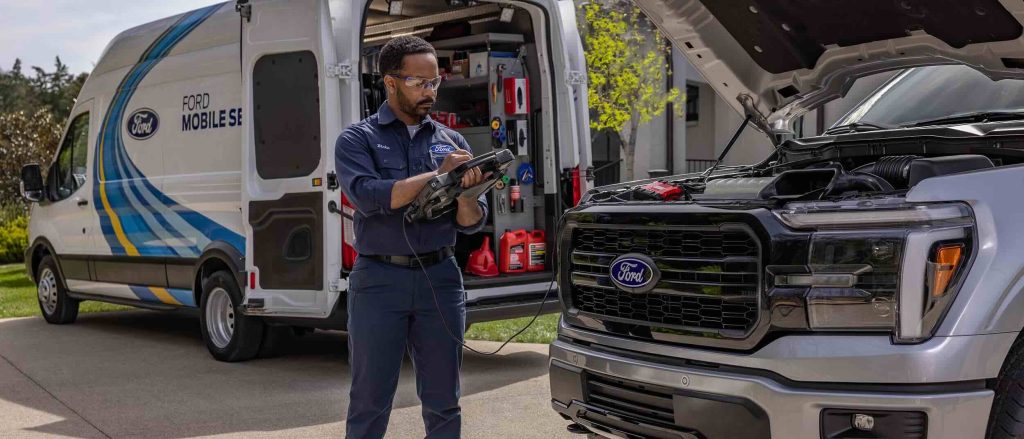
A mobile oil change changes that routine. With Ford Mobile Service, Murray Ford of Kingsland can send a factory-trained and certified technician to your home or workplace for eligible maintenance. Oil and filter changes are on the list, along with several other services that would normally send you straight to the service lane.
Your Ford still gets professional attention. You get to keep more of your day.
Your Driveway Just Became the Service Lane
The appeal of a mobile oil change is pretty straightforward: your vehicle can stay where it’s already parked.
At Murray Ford Kingsland, our Mobile Service technicians can perform many of the same routine services handled at the dealership, including oil and filter changes, tire rotations, battery service, brakes, wipers, fluids and filters, diagnostic scanning, software updates, and certain recalls. Exact services can vary by appointment.
For Kingsland drivers, Ford Mobile Service near you can mean eligible maintenance right at your home or workplace. That lets you keep working, handle chores, or stay focused on the rest of your day while your Ford gets serviced.
It’s More Than an Oil Change on Wheels
An oil change sounds simple, but the right service still depends on the vehicle.
Today’s Fords have specific oil requirements, capacities, filters, and maintenance schedules. Our technicians have the parts, tools, and vehicle-specific knowledge needed to service modern Ford engines correctly. That’s Ford Mobile Service: you’re getting dealership service brought outside the dealership.
A mobile oil change can also be a good time to ask whether other eligible maintenance can be handled during the same visit.
When Does Your Ford Actually Need Fresh Oil?
You may not need to rely on an old 3,000-mile rule.
Many newer Ford vehicles use the Intelligent Oil-Life Monitor®, which calculates when an oil change is due based on how the vehicle is actually used. When it’s time, the vehicle displays a message in the information display. Our service team recommends following the maintenance intervals listed for your specific vehicle.
So if your dashboard says it’s time, a mobile oil change can help you take care of it without adding another stop to the week.
Oil is your engine’s lifeblood. Regular oil and filter changes fight wear, clear out harmful buildup, and help your engine deliver smooth, reliable performance mile after mile.
Does Ford Mobile Service Cost Extra?
Ford Mobile Service is designed to bring dealership service to your driveway without adding another stop to your day. Through December 31, 2026, the mobile-service convenience is complimentary at participating dealers, subject to availability, distance and dealer-specific requirements. That does not mean the oil change or repair itself is free, you are still responsible for the maintenance, parts and approved repair work performed.
The cost of a mobile oil change can vary based on your vehicle, required oil type, oil capacity, filter and any additional services you authorize. Ask our team for an estimate when scheduling.
“Near Me” Can Mean Right Outside
Ford Mobile Service in Kingsland can bring eligible maintenance right to your home or workplace, so the service visit comes to you instead of the other way around.
Murray Ford of Kingsland can perform eligible service at your location, provided the appointment and address meet its Mobile Service requirements. Because service areas can vary based on distance, availability, and other conditions, we recommend confirming your location when booking.
For busy drivers around Kingsland, a mobile oil change can turn routine maintenance from another errand into something that happens in the background of your day.
Take the Oil Change Off Your Errand List
Already searching for Ford Mobile Service near you because maintenance is due? Bring us your vehicle information and the service you need. We’ll help determine what can come to you and what, if anything, is better handled at the dealership. When that oil-life reminder appears, you don’t necessarily need to start rearranging Saturday morning.
Schedule a mobile oil change with Murray Ford of Kingsland and ask our team whether your vehicle, location, and requested service qualify for a Mobile Service appointment. Contact us today or schedule through the FordPass® app where available.
Mobile Oil Change FAQs
A mobile oil change can make routine maintenance easier, but it’s natural to have questions before booking your first appointment. Here’s what to know about service, pricing, and having a technician come to you.
What Is Ford Mobile Service?
Ford Mobile Service allows a participating dealership to send a factory-trained and certified technician to your home, workplace, or another eligible location for qualifying maintenance and repairs. At Murray Ford of Kingsland, available services include oil and filter changes, brakes, batteries, tire rotations, wipers, software updates, diagnostic scanning, and certain recalls. Get in touch with our team for additional information.
How Much Is Ford Mobile Service?
Ford Mobile Service pricing depends on the maintenance or repair your vehicle needs. Through December 31, 2026, the mobile-service visit is advertised as complimentary at participating dealers, subject to availability, distance and dealer-specific criteria. You are still responsible for applicable maintenance, parts and repair charges.
How Much Does a Mobile Oil Change Cost?
Cost can vary based on your vehicle, required oil and filter, oil capacity, and any additional maintenance performed. Ask for current pricing and available service offers when you schedule.
Does Ford Mobile Service Cost More?
The Mobile Service mobile visit itself is complimentary, so having the technician come to you doesn’t carry a separate Mobile Service charge. Parts and repair costs still apply. If a Ford Mobile Service near you sounds convenient, confirm current pricing, eligibility, and available offers when booking.

Not every service visit needs to become an all-day event.
Sometimes your Ford just needs fresh oil, a tire rotation, a battery check, or someone to take a look at brakes that suddenly sound a little too talkative. When you need Ford service near you, Quick Lane® at Murray Ford of Kingsland gives you a convenient place to handle many of those everyday maintenance needs. And despite the name, Ford Quick Lane does a lot more than quick oil changes.
Quick Lane Handles the Maintenance That Keeps Sneaking Up
Think of Quick Lane as the place for routine maintenance that keeps your vehicle ready for daily driving.
At Murray Ford of Kingsland, our service team handles oil changes, tires, brakes, batteries, alignments, air conditioning, transmission service, suspension, wipers, electrical work, and more. That means Ford service near you can cover quite a bit before you ever need to think about a more involved repair appointment.
Oil Change Due? Don’t Wait for the Reminder to Get Louder
A Ford oil change is easy to postpone, but also easy to check off the list.
Murray Ford’s The Works® service combines an oil change with a tire rotation and pressure check, brake inspection, Multi-Point Inspection, fluid top-off, battery test, and checks of filters, belts, and hoses. Ford Quick Lane is a super convenient way to handle several maintenance items in one visit.
If your oil-life reminder is on, scheduling Ford service near you can make it easier to take care of routine maintenance before it gets pushed further down the list.
Brakes Usually Give You a Hint Before They Demand Attention
Brakes don’t need to fail dramatically before they deserve a look. Squealing, grinding, vibration, or changes in pedal feel are signs your brakes need attention. Quick Lane handles brake service right here in Kingsland.
If you need a brake repair in Kingsland, bring the vehicle in, describe what you’re hearing or feeling, and let our technicians take a closer look. With our Ford service near you, it’s easy to address brake concerns before they turn into a bigger repair.
Tires and Batteries Have a Habit of Becoming Urgent
A battery can seem fine until the morning your engine won’t start, and tire wear can happen gradually enough to miss.
Quick Lane can help with both. At Murray Ford, we offer tire and battery service along with wheel alignments, steering and suspension work, and other routine care. That makes Ford Quick Lane extra useful when you want to handle several maintenance items in one stop.
Heading from Kingsland toward Brunswick, Jacksonville, or farther down I-95? A quick check of tire condition, pressure, battery health, and other basics can be a smart addition to your pre-trip checklist.
Do You Need an Appointment? Not Always
Here’s where the “Quick” part earns its name.
With Quick Lane, no appointment is needed for basic oil-change service, and Murray Ford also offers walk-in maintenance. You can still schedule ahead if that works better for your day. So when scheduling Ford service near you needs to fit around a busy schedule, you’ve got options!
For more involved work, it’s smart to call first. Our team can tell you whether Quick Lane is the right fit or if your vehicle should go to our full service department.
Bring Us the Maintenance List
Oil is due. The wipers streak. One tire keeps looking low. The brakes have started making a noise you definitely didn’t hear last week. Bring the list.
At Murray Ford of Kingsland, Ford Quick Lane can help you tackle routine maintenance without turning every item into a separate service visit. Visit our Quick Lane for Ford service in Kingsland or schedule ahead if you prefer having a time on the calendar.
Need a Ford oil change or brake repair near you? Tell us what your vehicle needs and what you’ve noticed. We’ll help you sort out what should be handled now and what can wait.
Routine maintenance isn’t exciting, and that’s kind of the point. The goal is to take care of the little things before they become expensive, inconvenient ones. Get in, get the maintenance handled, and get back to whatever you actually wanted to do with your day.
Ford Quick Lane FAQs
Need routine Ford service near you? These FAQs can help you figure out whether Quick Lane is the right stop for your next oil change, brake check, or maintenance visit.
What Is Ford Quick Lane?
Ford Quick Lane is a service network focused on routine maintenance and common automotive repairs. Services can include oil changes, tires, brakes, batteries, alignments, cooling systems, air conditioning, electrical work, and more. At Murray Ford of Kingsland, we operate a Quick Lane for these everyday service needs.
Do I Need an Appointment for Ford Quick Lane?
Not necessarily. If you’re looking for Ford service near you, Quick Lane requires no appointment for basic oil-change service. You can also schedule ahead when that’s more convenient.
Can I Get a Ford Oil Change at Quick Lane?
Yes. Oil changes are a core Quick Lane service. At Murray Ford, we also offers The Works®, which combines an oil change with a tire rotation, brake inspection, battery test, fluid check, and other maintenance checks.
Can Quick Lane Handle Brake Service?
Yes. Quick Lane lists brakes among its available services. If you need brake repair near you, the technicians can inspect the system and determine what service or repair is needed.
Where Can I Find Ford Service Near Me for Routine Maintenance?
Our Quick Lane® at Murray Ford of Kingsland can handle many everyday service needs, including oil changes, tire service, brakes, batteries, alignments, wipers, and other routine maintenance.
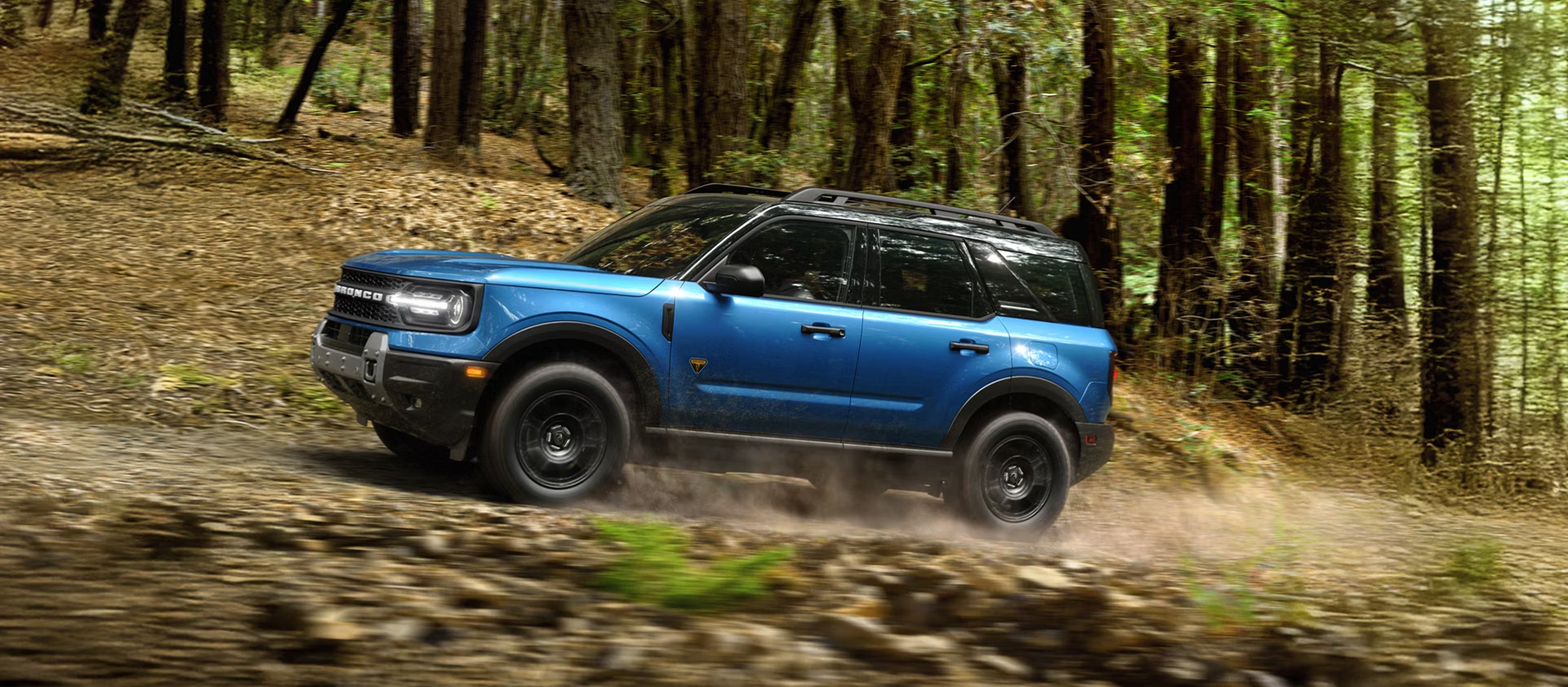
The Bronco and Bronco Sport share boxy styling, standard 4×4 capability, and an appetite for adventure. They’re still built for two different shoppers.
In the Bronco vs. Bronco Sport comparison, the Bronco is the larger, more trail-focused SUV. It offers two-door and four-door body styles, removable doors and roof options, stronger available engines, and greater towing capability. The Bronco Sport is a smaller four-door SUV designed to balance everyday comfort, useful cargo room, and off-pavement confidence.
Choosing the Bronco or Bronco Sport comes down to how much capability you need and how much SUV you want to drive every day.
Size: Easier Parking or Bigger Presence?
The Bronco Sport is the more compact choice. The 2026 model measures 173.1 inches with the 1.5-liter engine and 173.4 inches with the available 2.0-liter. It seats five and offers up to 65.2 cubic feet of cargo space.
The Bronco comes in two-door and four-door body styles. Two-door models are similar in length to the Bronco Sport, while four-door versions stretch to about 189 inches and add easier rear-seat access plus more room for passengers and gear.
In daily life, the Bronco vs. Bronco Sport difference is easy to feel. The Bronco Sport is simpler to maneuver and park, while the Bronco feels taller, wider, and more substantial. Deciding between the Bronco or Bronco Sport often starts with how much space you want to manage every day.
Performance: Daily Response or Trail Muscle?
The Ford Bronco vs. Ford Bronco Sport specs tell two distinct performance stories.
The Bronco Sport offers a 1.5-liter EcoBoost® with 180 horsepower and 200 lb-ft of torque, or an available 2.0-liter EcoBoost with 250 horsepower and 280 lb-ft. Every Bronco Sport includes standard 4×4.
The Bronco brings more power. In the Bronco vs. Bronco Sport comparison, its 2.3-liter EcoBoost makes up to 300 horsepower, the available 2.7-liter EcoBoost V6 reaches up to 330 horsepower, and the Bronco Raptor’s 3.0-liter EcoBoost V6 delivers 418 horsepower.
Around Kingsland, the Bronco Sport feels responsive and easy to manage. The Bronco adds more power, specialized off-road hardware, and broader configuration choices. The Bronco or Bronco Sport decision comes down to daily ease versus maximum capability.
4×4 Capability: Ready vs. Really Ready
The Bronco Sport includes standard 4×4 and offers available trail-focused upgrades such as underbody protection, recovery hooks, added terrain modes, and upgraded suspension.
The Bronco goes further with available locking differentials, high-clearance suspension, larger tires, and more aggressive hardware. On qualifying builds, the Sasquatch® Package adds Advanced 4×4, front and rear locking differentials, high-clearance suspension, and 35-inch tires.
The Ford Bronco vs. Ford Bronco Sport specs show that both are ready for rough weather and weekend trails, but the Bronco has the higher off-road ceiling. For beach access, campsites, and lighter trails, the Bronco Sport may be enough. For more technical terrain, the Bronco is the stronger choice in the Bronco vs. Bronco Sport comparison.
Towing: How Much Are You Bringing?
The Bronco Sport can tow up to 2,200 pounds in certain 1.5-liter configurations with the available Class II Trailer Tow Package. Properly equipped versions can offer higher capacity depending on engine and equipment.
Most 2026 Bronco models can tow up to 3,500 pounds when properly equipped. Bronco Raptor raises the maximum to 4,500 pounds. Actual towing capacity depends on configuration, passengers, cargo, and equipment.
When choosing the Bronco or Bronco Sport, think about the trailer you actually plan to pull. The Bronco Sport can handle lighter recreational equipment, while the Bronco gives you more room for demanding towing plans.
Features: Open-Air Fun or Everyday Flexibility?
The Bronco’s removable doors and roof options deliver the open-air experience that sets it apart.
The Bronco Sport keeps fixed doors and a roof, but its four-door layout, five-passenger seating, compact size, and flexible cargo space make daily life easier.
Both offer modern tech and adventure-focused features. The Bronco vs. Bronco Sport choice comes down to priorities: choose the Bronco for open-air driving and more serious trail hardware, or the Bronco Sport for compact size and everyday practicality.
Bronco or Bronco Sport: The Quick Decision
Choose the Bronco if you want:
- Removable doors and roof options
- More available horsepower
- Higher available towing capacity
- Two-door or four-door body styles
- More specialized off-road hardware
Choose the Bronco Sport if you want:
- A smaller SUV that’s easier to maneuver
- Standard four-door practicality
- Seating for five
- Flexible cargo room
- Standard 4×4 capability in a daily-friendly package
The numbers help, but the best way to settle Bronco vs. Bronco Sport is to drive both. Seating position, visibility, ride quality, rear-seat access, and overall size can make your decision clear within a few miles.
Put Both Broncos to the Test in Kingsland
At Murray Ford of Kingsland, our team can help you compare trims, engines, towing equipment, cargo space, and off-road features to make the Bronco vs. Bronco Sport decision easier without burying you in specs.
Browse our available inventory online or visit us in Kingsland to compare the Bronco or Bronco Sport from the driver’s seat.
Two Broncos. One Right Answer.
There’s no automatic winner in the Bronco vs. Bronco Sport comparison. There’s only the one that fits your commute, passengers, gear, and weekends better.
The Bronco is the bigger, more specialized adventurer. The Bronco Sport delivers Bronco attitude in a more compact and practical package. The Ford Bronco vs. Ford Bronco Sport specs help explain the differences, but the right choice still comes down to how you drive, what you carry, and where you plan to go.
Bronco vs. Bronco Sport FAQs
Still comparing Bronco vs. Bronco Sport dimensions, towing, and capability? These quick answers cover the essentials.
What is the difference between Bronco Sport and Bronco?
The Bronco is a larger, more off-road-focused SUV with two-door and four-door configurations, removable body panels, stronger available engines, and higher towing capacity. The Bronco Sport is a smaller four-door SUV focused on daily comfort, cargo flexibility, and approachable 4×4 capability.
Is Bronco Sport 4×4 or AWD?
Ford describes the 2026 Bronco Sport as having standard 4×4. Equipment and capability vary by trim, with more advanced 4×4 hardware offered on select configurations.
How much can a Bronco Sport tow?
Certain 2026 Bronco Sport models can tow up to 2,200 pounds with the available Class II Trailer Tow Package. Exact capacity depends on engine, trim, and equipment.
How long is a Bronco Sport?
The 2026 Bronco Sport measures 173.1 inches with the 1.5-liter engine or 173.4 inches with the 2.0-liter engine.
How much can a Ford Bronco tow?
Most 2026 Bronco models can tow up to 3,500 pounds when properly equipped. Bronco Raptor can tow up to 4,500 pounds.
How long is a Ford Bronco?
Length varies by body style and trim. Two-door models are roughly 173 inches long, while many four-door versions measure about 189 inches.
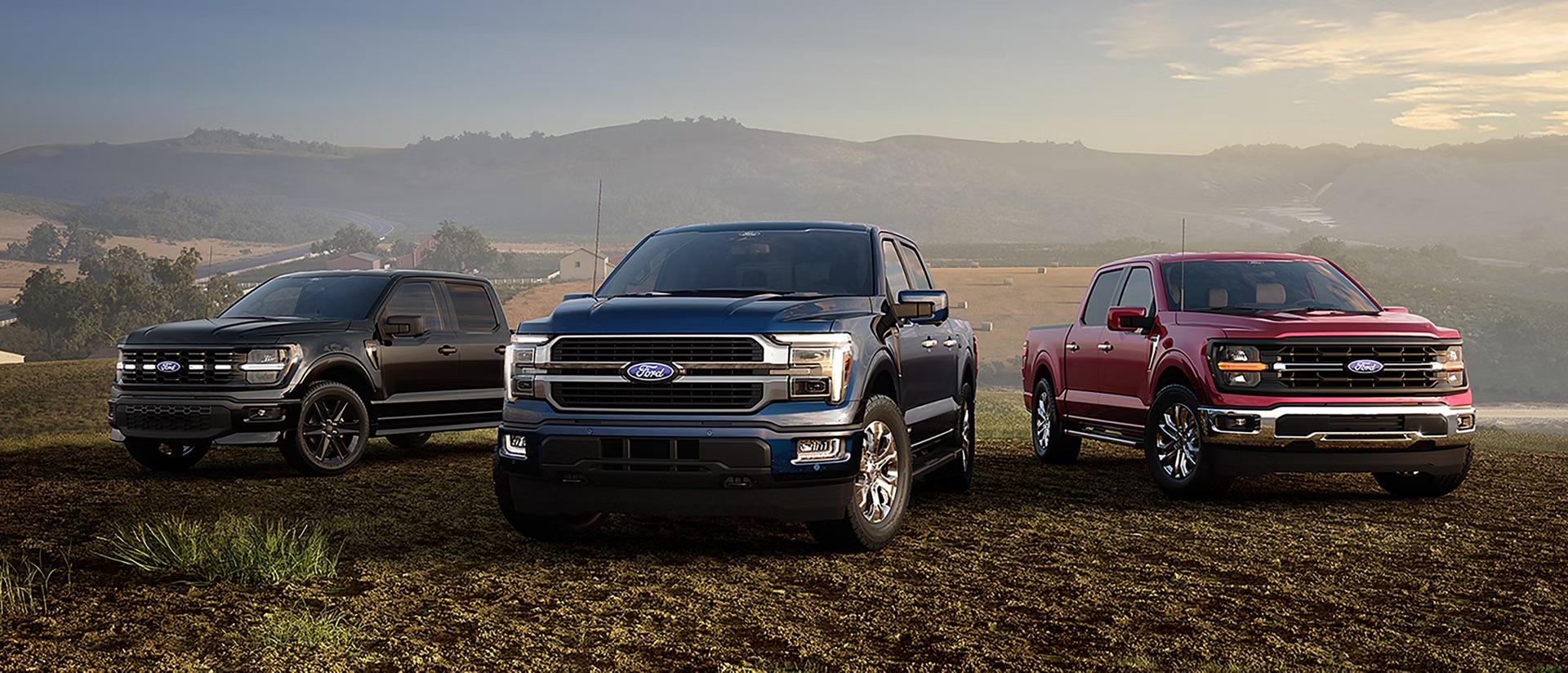
Buying a new Ford includes factory-backed protection for certain repairs caused by defects in materials or workmanship. For shoppers asking what is Ford’s powertrain warranty, it’s the part of the New Vehicle Limited Warranty that focuses on eligible engine, transmission, and drivetrain components.
The Ford powertrain warranty is one important part of that protection. For new Ford vehicles sold in the United States, powertrain coverage generally lasts five years or 60,000 miles, whichever comes first. It focuses on eligible components inside the engine, transmission, and drivetrain. Ford’s broader bumper-to-bumper New Vehicle Limited Warranty generally lasts three years or 36,000 miles.
That difference matters. Once bumper-to-bumper protection expires, your eligible powertrain components may still have coverage remaining.
What Is Ford’s Powertrain Warranty?
Shoppers asking what is Ford’s powertrain warranty usually want to know which parts qualify and how long coverage lasts.
The Ford powertrain warranty helps cover eligible repairs when a covered engine, transmission, or drivetrain component fails because of a defect in factory-supplied materials or workmanship. It isn’t a maintenance plan, and it doesn’t cover every mechanical problem.
Covered engine parts may include internal lubricated components, the cylinder block and heads, oil pump, oil pan, timing components, turbocharger or supercharger, water pump, seals, and gaskets. Eligible transmission and drivetrain parts may include internal transmission components, the case, torque converter, transfer case, mounts, axle shafts, bearings, driveshafts, universal joints, constant-velocity joints, seals, and gaskets.
Exact Ford powertrain warranty coverage depends on the vehicle, failed component, cause of failure, and warranty terms. An authorized Ford dealer must diagnose the issue before confirming coverage.
Five Years, 60,000 Miles: How the Clock Works
For most new Ford vehicles in the U.S., Ford powertrain warranty coverage begins on the warranty start date and continues for five years or 60,000 miles, whichever comes first.
“Whichever comes first” is the key phrase. A five-year-old Ford with 40,000 miles may be outside the warranty because it reached the time limit. A two-year-old Ford with 61,000 miles may also be outside it because it crossed the mileage limit.
The warranty doesn’t restart when the vehicle is sold. Its remaining coverage is tied to the original warranty start date and mileage history, so used-Ford shoppers should verify the specific vehicle’s status by VIN.
Powertrain vs. Bumper-to-Bumper Coverage
The Ford powertrain warranty and bumper-to-bumper warranty overlap at first, but they serve different purposes.
Ford’s bumper-to-bumper coverage generally lasts three years or 36,000 miles. It applies more broadly to eligible factory-installed vehicle components, subject to exclusions and warranty terms. Powertrain protection generally lasts longer at five years or 60,000 miles, but it covers a narrower group of components.
Think of it this way:
- Bumper-to-bumper coverage is broader but shorter.
- Powertrain coverage is narrower but lasts longer.
Neither warranty covers every repair. Normal maintenance, wear items, accident damage, misuse, environmental damage, and problems caused by improper maintenance may fall outside Ford warranty coverage.
What the Warranty Doesn’t Replace
A Ford powertrain warranty isn’t a substitute for routine care. Oil changes, filters, fluid service, tire rotations, and other scheduled maintenance remain the owner’s responsibility.
Keeping service records is a smart move, especially when a repair could be connected to maintenance history. Follow the schedule and fluid specifications listed in your Ford owner’s manual.
Warranty coverage also depends on why a component failed. A covered transmission part that fails because of defective materials may qualify. Damage caused by a collision, neglect, improper modifications, contaminated fluids, or operation outside the vehicle’s limits may not.
That’s why Ford powertrain warranty coverage should be viewed as protection against eligible factory defects, not unlimited coverage for every engine or drivetrain problem.
Why Powertrain Protection Matters
Engines, transmissions, and driveline systems contain some of a vehicle’s most complex components. Knowing eligible parts may remain protected through Ford powertrain warranty coverage beyond the basic warranty period can add confidence during the first years of ownership.
For drivers asking what is Ford’s powertrain warranty, it’s protection for qualifying engine, transmission, and drivetrain repairs caused by defects in materials or workmanship. It won’t replace routine maintenance, but it may help with eligible repair costs during the coverage period.
Check Your Ford’s Coverage in Kingsland
Warranty questions are rarely one-size-fits-all. Model year, mileage, warranty start date, vehicle history, modifications, and the cause of the concern can all affect Ford powertrain warranty eligibility.
At Murray Ford of Kingsland, our team can help you review Ford warranty coverage, check warranty status by VIN, and arrange a diagnosis for concerns involving eligible engine, transmission, or drivetrain components. Ford requires warranty repairs to be completed by an authorized Ford dealer, although some specialized repairs may require a properly equipped location.
Contact us or visit Murray Ford of Kingsland to get clear answers about your vehicle before authorizing repairs.
Know What’s Covered Before You Need It
The Ford powertrain warranty provides valuable protection, but the details matter. Knowing the time and mileage limits, maintaining your vehicle correctly, and getting concerns diagnosed promptly can help you make the most of your coverage.
Whether you’re shopping for a new Ford or checking protection on the one already in your driveway, our Kingsland team is ready to help you understand the fine print without making it feel complicated.
Ford Powertrain Warranty FAQs
Here are quick answers about Ford powertrain warranty coverage, its limits, and how it fits within broader Ford warranty coverage.
What does Ford powertrain warranty cover?
The Ford powertrain warranty covers eligible components within the engine, transmission, and drivetrain when they fail because of defects in materials or workmanship. Covered parts may include internal engine and transmission components, seals, gaskets, driveshafts, axles, bearings, and transfer-case parts. An authorized Ford dealer must diagnose the issue and confirm eligibility.
How long is Ford powertrain warranty?
For most new Ford vehicles sold in the U.S., the warranty generally lasts five years or 60,000 miles from the warranty start date, whichever comes first.
Does Ford warranty cover windshield damage?
Windshield damage isn’t normally part of powertrain coverage. Coverage under the broader New Vehicle Limited Warranty depends on the cause. For example, earlier Ford warranty guides have provided limited coverage for certain windshield stress cracks during the first 12 months or 12,000 miles, while chips and impact damage are generally excluded. Confirm the terms in the warranty guide for your exact model year.
Are oil leaks covered under Ford powertrain warranty?
They may be. Ford powertrain warranty coverage can include certain seals, gaskets, the oil pan, valve covers, timing cover, and other engine components. Coverage depends on the source of the leak and whether it resulted from a defect rather than damage, wear, neglect, or improper maintenance.
Does Ford powertrain warranty cover transmission repairs?
Yes, eligible transmission components are included. Ford lists internal transmission parts, the transmission case, torque converter, transfer case, seals, gaskets, and mounts among potentially covered items. The failure must meet the warranty’s eligibility requirements.
Is Ford powertrain warranty transferable?
Remaining New Vehicle Limited Warranty protection generally stays with the vehicle rather than ending when the first owner sells it. The original start date, mileage limit, and warranty terms still apply. Have our team check the VIN to confirm the remaining coverage on a specific used Ford.
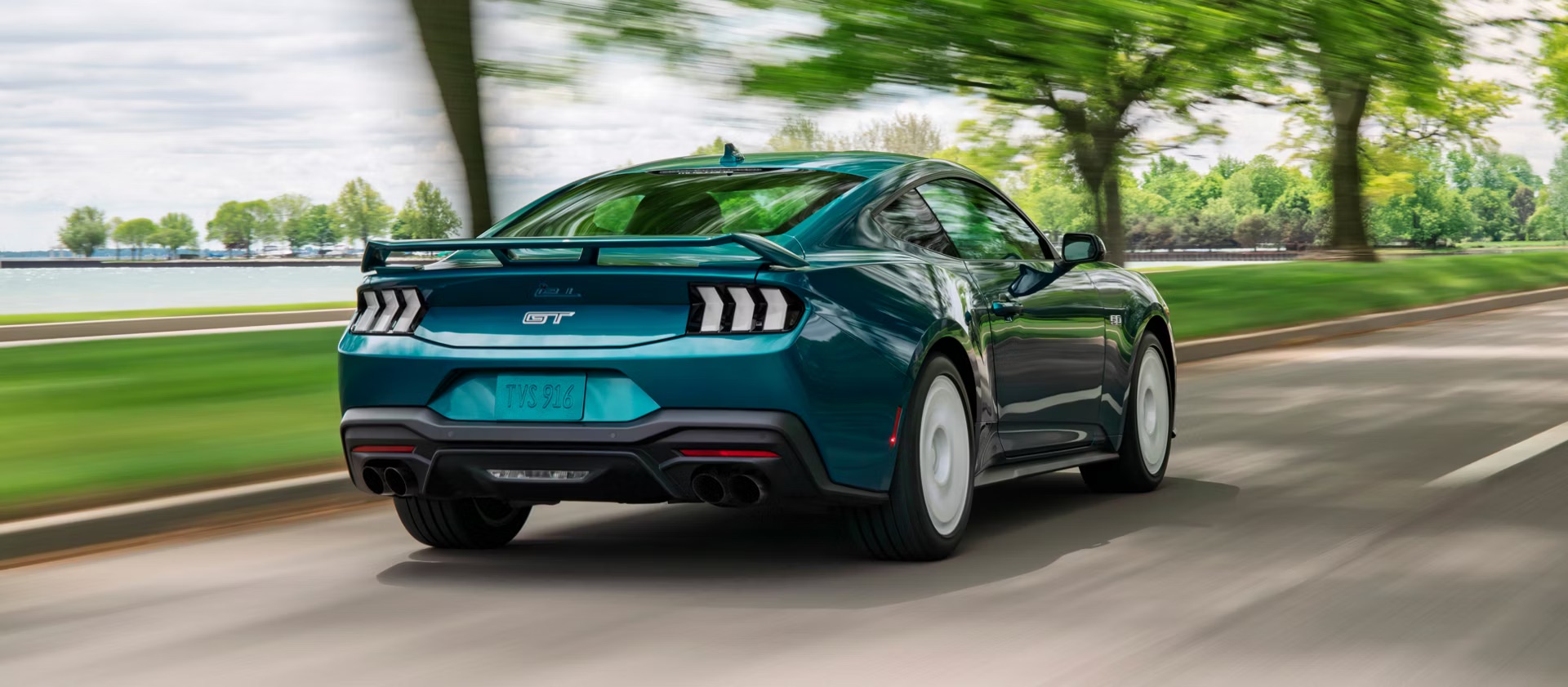
You’ve probably seen the EcoBoost® badge on a Ford truck, SUV, or Mustang. But what is an EcoBoost engine, and what does that badge really mean?
Ford EcoBoost engines combine turbocharging, direct fuel injection, and variable camshaft timing to deliver strong power and torque from a smaller gas engine. The goal isn’t just a smaller engine. It’s a smarter balance of performance and efficiency.
For Kingsland drivers asking what is EcoBoost, think of it as Ford’s way of delivering responsive power with fuel economy in mind. Actual results still depend on the vehicle, driving habits, and conditions.
What Is an EcoBoost Engine and How Does It Work?
Three core technologies help explain what an EcoBoost engine is:
Turbocharging uses exhaust gases to spin a turbine that pushes more air into the engine. That extra airflow helps the engine produce stronger power when you need it.
Direct fuel injection sends fuel precisely into the combustion chamber. This helps the engine respond efficiently across changing speeds and driving conditions.
Twin independent variable camshaft timing, often called Ti-VCT, adjusts valve timing based on engine speed and demand. That supports a better balance of torque, power, and efficiency.
Together, these technologies capture the meaning of EcoBoost: strong turbocharged performance from a smaller engine, with fuel economy kept in mind.
Why Ford Shoppers Choose EcoBoost
Understanding what EcoBoost is becomes easier when you look at what it can deliver behind the wheel.
Strong Power From Less Displacement
A turbocharged engine can produce output comparable to a larger naturally aspirated engine. The 2026 Mustang’s 2.3-liter EcoBoost four-cylinder, for example, produces 315 horsepower and 350 lb-ft of torque.
Useful Low-End Torque
Turbocharged torque can arrive lower in the rev range, helping with acceleration, passing, hills, and towing. That’s especially useful in pickups and larger SUVs.
Efficiency When You Aren’t Pushing Hard
A smaller engine can use less fuel under lighter loads than a larger engine might. Actual fuel economy still depends on vehicle weight, gearing, weather, cargo, towing, and driving habits.
A Powertrain for Different Personalities
EcoBoost engines appear in vehicles ranging from the compact Escape and Maverick to the Bronco, Mustang, F-150, and Expedition. The technology can be tuned for commuting, towing, off-roading, or performance.
Which 2026 Ford Vehicles Offer EcoBoost Engines?
Ford offers EcoBoost power across its 2026 SUVs, trucks, and performance models. For shoppers wondering what an EcoBoost engine is, it’s a flexible engine family built for very different jobs.
- The 1.5-liter EcoBoost is available in the Escape and Bronco Sport, while the 2.0-liter appears in the Escape, Bronco Sport, and Maverick.
- The 2.3-liter powers models including the Bronco, Explorer, Mustang, and Ranger.
- The 2.7 EcoBoost V6 is available in the Bronco, F-150, and Ranger, with strong low-end torque for towing, passing, and daily driving.
- Higher-output options include the 3.0-liter EcoBoost V6 in the Bronco Raptor, Explorer ST, and Ranger Raptor, plus the 3.5-liter EcoBoost V6 in the F-150 and Expedition.
An EcoBoost engine is one core technology tuned for commuting, towing, off-roading, and performance. That flexibility is central to the meaning of EcoBoost. Exact output and availability vary by model, trim, and configuration.
EcoBoost vs. a Naturally Aspirated Engine
A naturally aspirated engine draws air into its cylinders without a turbocharger, which can mean simpler power delivery and fewer turbo-related components.
So, what is EcoBoost by comparison? EcoBoost uses forced induction to help a smaller engine produce stronger power and torque. When shoppers ask what is an EcoBoost engine, that turbocharged difference is usually the key.
Neither design is automatically better. The right choice depends on how you drive, tow, and prioritize efficiency, simplicity, or maximum output.
EcoBoost vs. Hybrid and PowerBoost
EcoBoost is gas-only technology. Ford hybrids add an electric motor and battery to assist the engine and recover energy while slowing.
PowerBoost® is Ford’s full-hybrid truck powertrain. In the F-150, it pairs a 3.5-liter EcoBoost V6 with electric assistance and available Pro Power Onboard.
So, what is an EcoBoost engine compared with PowerBoost? EcoBoost uses turbocharged gas power, while PowerBoost adds hybrid hardware for more torque, improved efficiency potential, and available onboard power.
Smart Ownership Starts Under the Hood
Knowing what an EcoBoost engine is also means knowing how to care for one. Follow Ford’s oil-change schedule, use the specified oil, and check the owner’s manual for fuel recommendations. Some models can use regular gas but may need premium to reach maximum advertised output.
Towing, heavy payloads, short trips, and aggressive acceleration can affect fuel economy and service needs. For shoppers asking what is EcoBoost in real-world use, remember that frequent boost can increase fuel use.
Find the Ford Engine That Fits Your Drive
Still deciding what is an EcoBoost engine and whether it fits your routine? At Murray Ford of Kingsland, we’ll help you compare EcoBoost, hybrid, PowerBoost, and naturally aspirated options based on your commute, towing plans, and performance priorities.
Browse our Ford inventory online or visit us in Kingsland to test-drive different powertrains and get a clearer sense of the meaning of EcoBoost from the driver’s seat.
Ford EcoBoost FAQs
Here are quick answers covering what EcoBoost is, output, durability, and Ford’s turbocharged engine history.
What does EcoBoost mean?
EcoBoost is Ford’s name for gas engines that use turbocharging, direct fuel injection, and variable camshaft timing to balance performance and efficiency. For shoppers asking what is an EcoBoost engine, the “Eco” points to efficiency goals, while “Boost” refers to turbocharged power.
Is the 2.7 EcoBoost a good engine?
The 2.7 EcoBoost is a strong choice for shoppers who want substantial torque without stepping up to Ford’s largest gas engines. It shows what is EcoBoost in practical terms by using turbocharging to deliver strong output from a smaller V6. In 2026 applications, the F-150 version produces 325 horsepower and 400 lb-ft of torque, while the Bronco version can produce 330 horsepower and 415 lb-ft.
How much horsepower does a 3.5 EcoBoost have?
Output depends on the vehicle and calibration. The 2026 F-150’s available 3.5-liter EcoBoost produces 400 horsepower and 500 lb-ft, while the 2026 Expedition offers 400 horsepower or 440 horsepower with its high-output version.
Are EcoBoost Mustangs reliable?
Reliability depends heavily on maintenance, use, and vehicle history. A properly maintained Mustang EcoBoost can be a practical performance car, but shoppers should inspect service records and have any used model evaluated before purchase.
What year did Ford introduce the EcoBoost engine?
Ford introduced the EcoBoost name and its first production applications for the 2010 model year. Shopping used? Remember that engine designs, components, and outputs have changed across generations.
Hello world!
Welcome to WordPress. This is your first post. Edit or delete it, then start writing!

